
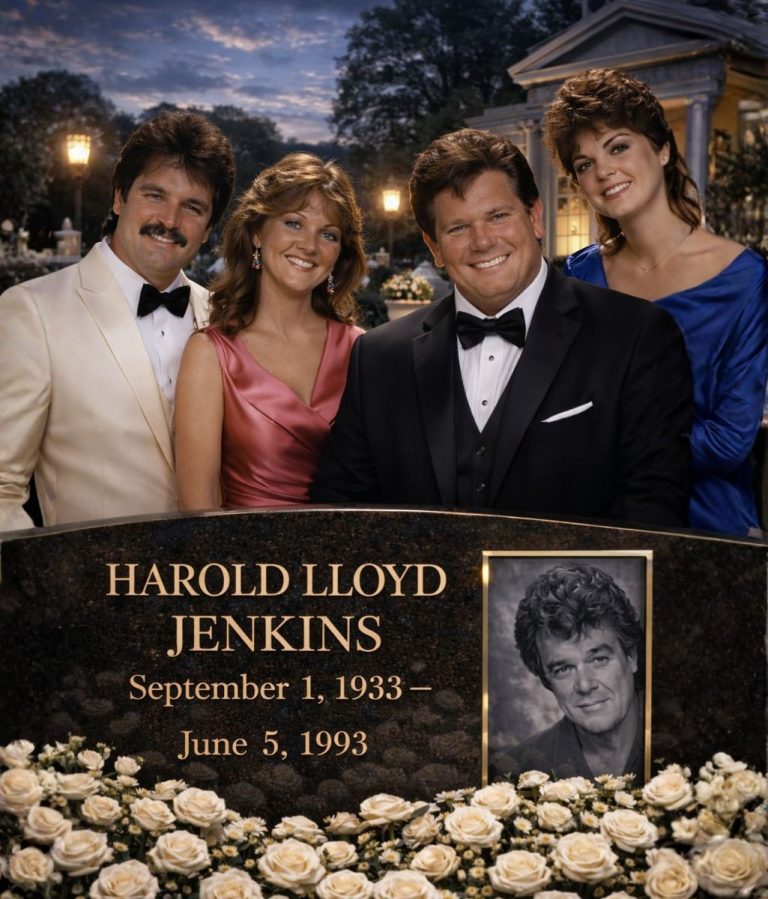
 Before the world knew him as Conway Twitty, before the sold-out stages and the remarkable string of 55 number-one hits, there was Harold Jenkins — a quiet boy from the Mississippi Delta, growing up in a world shaped by hardship, uncertainty, and the kind of struggle that rarely makes headlines.
He did not begin with opportunity.
He began with silence.
Raised during one of the most difficult periods in American history, Harold's early life was marked by long days, limited means, and a family that worked tirelessly just to get by. Music was not a career path then. It was not even a dream in the traditional sense. It was an escape, a way to process a world that often gave more challenges than comfort.
In small spaces—church gatherings, quiet evenings, fleeting moments between responsibilities—he found his voice.
It was not polished.
It was not trained.
But it was real.
And that reality would one day become the foundation of something extraordinary.
When Harold Jenkins became Conway Twitty, the transformation was more than a change of name. It was the creation of a presence, a voice that would soon rise to define an era of country music. His songs carried something listeners could not always explain—a depth, a sincerity, a quiet understanding of life's complexities.
Over time, that voice reached millions.
Hit after hit followed, until the number itself—55 number-one songs—became almost impossible to comprehend. But behind that success, behind the applause and recognition, there was another story unfolding—one that remained largely unseen.
Because Conway Twitty was not a man who spoke openly about his struggles.
He carried them.
Quietly.
Consistently.
Without asking for recognition or sympathy.
Those closest to him would later reflect on this part of his life with a kind of reverence. Not because it was dramatic or publicly visible, but because it was enduring. He showed up. Night after night. Year after year. Giving everything he had to the music, even when life behind the scenes was far more complicated than anyone realized.
There is a certain kind of strength in that—the ability to continue, to create, to connect with others while carrying burdens that remain unspoken.
And it is perhaps that strength that made his music feel so personal.
Listeners did not just hear his voice.
They felt it.
They recognized something in it—a truth that did not need to be explained, only experienced.
For years, that was all the world knew.
The songs.
The success.
The steady presence of a man who seemed, from the outside, to have built a life defined by music and achievement.
But after his passing, something began to change.
Slowly, carefully, his family began to share glimpses of the man behind the legend. Not to rewrite his story, but to complete it. To offer a fuller understanding of the life he had lived, and the quiet sacrifices he had made along the way.
What emerged was not a story of contradiction, but of depth.
A reminder that even those who appear strong, composed, and unwavering often carry more than they reveal. That greatness is not always loud. Sometimes, it is built in silence—in the decision to keep going, to keep giving, even when the weight becomes difficult to carry.
For those who revisit Conway Twitty's music now, there is an added layer of meaning.
The songs have not changed.
But the understanding has.
Each lyric, each note, now feels connected to something deeper—a life lived with resilience, with quiet determination, and with a commitment to something greater than personal comfort.
And perhaps that is the true legacy he leaves behind.
Not just the records.
Not just the accolades.
But the example of a man who turned hardship into harmony, who transformed silence into something the world could hear and hold onto.
Because in the end, Conway Twitty was never just a name.
He was a story.
A story of where he came from.
A story of what he carried.
And a story that, even now, continues to resonate—not because of what was revealed, but because of what was endured.