
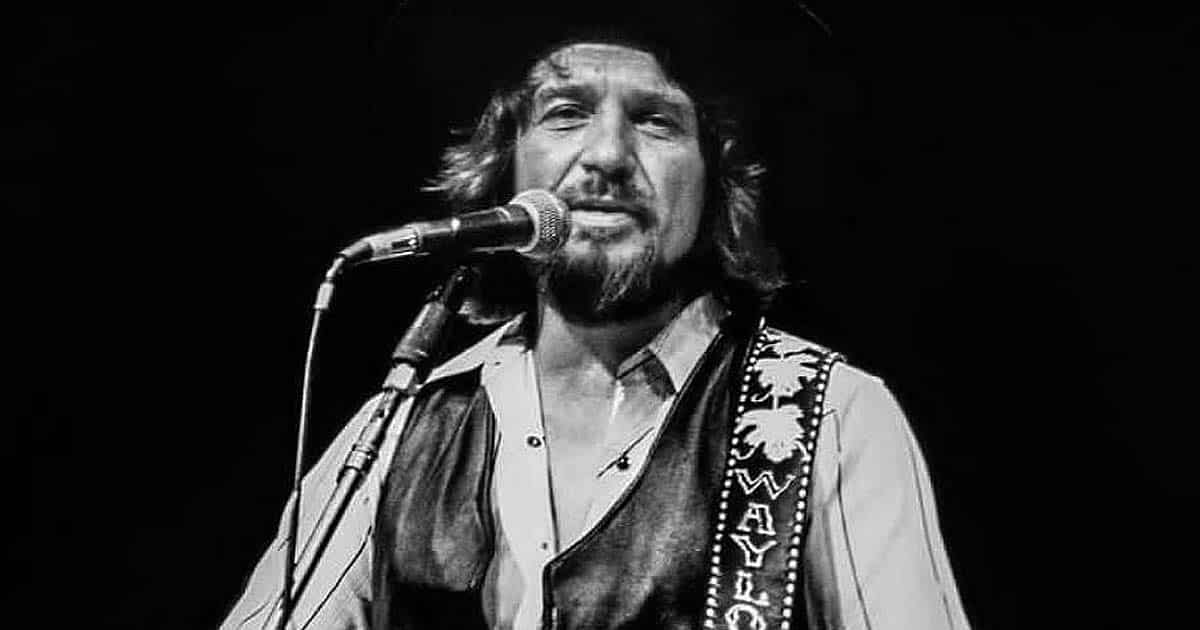
When we speak of Waylon Jennings, we often remember the rebel — the leather-clad outlaw who challenged Nashville's system and reshaped country music in the 1970s. But the final chapter of his life tells a quieter, more reflective story. It is not defined by defiance, but by resilience.
By the late 1990s, Waylon's health had begun to decline. Years of hard touring and personal battles had taken their toll. He was diagnosed with diabetes, a condition that would gradually limit his mobility and stamina. In 2001, complications from the disease led to the amputation of his left foot — a devastating physical setback for a man who had spent his life on the road and under the stage lights.
Yet even in those difficult months, Waylon did not lose his spirit.
He continued to record and collaborate when he could. He remained devoted to his wife, Jessi Colter, and their son. Friends described him during this time as reflective, sometimes quieter than before, but still sharp-witted and deeply engaged with music.
Waylon Jennings passed away peacefully in his sleep on February 13, 2002, at the age of 64, in Chandler, Arizona. The news rippled through the country music community like a heavy chord. Tributes poured in from longtime friend Willie Nelson, fellow artists, and generations of musicians who had followed the path he helped carve.
His final chapter was not one of spectacle. There was no dramatic farewell tour, no grand goodbye speech. Instead, it was marked by dignity — a man who had already said what he needed to say through decades of music.
In many ways, Waylon's legacy had been secured long before his passing. Albums like Honky Tonk Heroes (1973) and Dreaming My Dreams (1975) had forever altered the direction of country music. He proved that artists could demand creative control, that authenticity mattered more than polish, and that independence was worth fighting for.
But perhaps the most touching part of his last chapter is this: despite the hardship, he remained surrounded by family and love. The outlaw image never fully captured the private man — the husband, the father, the friend.
When the curtain finally fell, it did so gently.
Waylon Jennings' voice may have grown silent in 2002, but the outlaw spirit he embodied continues to echo across country music. And in that final chapter, we see not just a legend, but a man who faced life — and its ending — with the same steady strength that defined his songs.